Why is Bulgaria blocking North Macedonia's EU path? The dispute explained (2026)
Sofia says Skopje must keep its 2022 promises, starting with adding Bulgarians to its constitution. Skopje wants guarantees first. Status in October 2026.
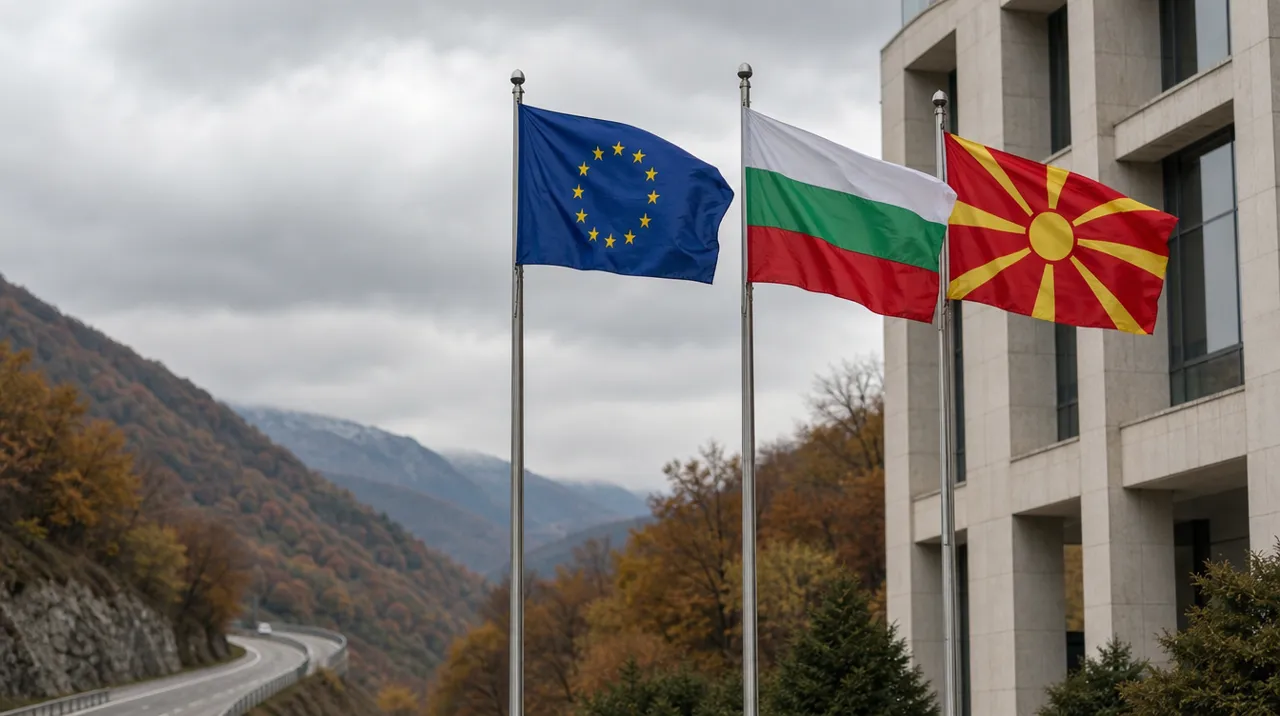
Bulgaria’s parliament lifted its formal veto on North Macedonia’s EU talks in June 2022, but Sofia insists that Skopje first keep the commitments made in July 2022, above all adding Bulgarians to its constitution. North Macedonia’s government says it will not do that without guarantees that no new demands follow. As of October 2026 the constitution has not been amended, so the first negotiating cluster remains unopened.
What was agreed in 2022?
Bulgaria blocked the EU negotiating framework for North Macedonia in November 2020. Under the French EU Council presidency a compromise followed. On 24 June 2022 Bulgaria’s parliament voted 170 to 37 (21 abstentions) to lift the veto with conditions, France 24 reported: Bulgarians written into the constitution “on an equal footing with other peoples”, a bilateral protocol, and action against hate speech. On 16 July 2022 North Macedonia’s parliament approved the deal with 68 votes, while the opposition VMRO-DPMNE did not take part, according to Novinite. The foreign ministers signed the second bilateral protocol in Sofia on 17 July (Meta.mk), and the European Commission says the first intergovernmental conference took place that July.
What does Sofia say?
On 18 June 2026, Prime Minister Rumen Radev said: “We now have to make efforts again to convince leaders that the consensus reached in July 2022 must be respected,” BTA reported. He pointed to the second protocol and said Bulgaria had won EU-wide support for constitutional guarantees for Bulgarians.
What does Skopje say?
Prime Minister Hristijan Mickoski told parliament in January 2026: “While I am prime minister, there will be no constitutional amendments without these two guarantees” — protection for ethnic Macedonians in Bulgaria and “not new blockades, humiliations or vetoes based on subjective political reasons”, BalkanView reported. In May 2026 his government refused an opposition call for a referendum on the issue (Mediapool).
What happened in 2026?
- 9 May: Mickoski invited the newly elected Radev to Skopje (Novinite).
- 17 June: The European Parliament adopted its North Macedonia report; it says constitutional amendments are needed to open the first cluster. BGNES reported that it calls the inclusion of Bulgarians a mandatory condition.
- 18 June: After two Bulgarian embassy vehicles were set on fire in Skopje, Radev said “we have nothing more to discuss with the Prime Minister of North Macedonia” and, asked about suspending EU funding, that Bulgaria would defend its national interest (BTA).
The Warsaw think tank OSW titled its 26 March 2026 analysis “Waiting for Godot”. Varna Pulse does not assess the historical or language questions behind the dispute.
What does it mean for Varna?
Nothing in these statements changes travel rules, so visitors from North Macedonia follow the usual entry rules. For the domestic context, see our guide to Bulgarian politics and the presidential runoff on 1 November.
Sources
- France 24 / AFP (Bulgarian parliament vote, 24 June 2022)
- Novinite (North Macedonia's parliament vote, 16 July 2022)
- Meta.mk (second bilateral protocol, 18 July 2022)
- European Commission, North Macedonia enlargement page
- BalkanView (Mickoski in parliament, 29 January 2026)
- Novinite (Mickoski invites Radev, 9 May 2026)
- Mediapool (referendum refused, 28 May 2026)
- European Parliament press release (17 June 2026)
- BGNES (European Parliament report, 17 June 2026)
- BTA (Prime Minister Radev, 18 June 2026)
- OSW Centre for Eastern Studies (26 March 2026)
Frequently asked questions
Why does Bulgaria block North Macedonia's EU accession?
Sofia says it is not adding new conditions but insisting on the July 2022 commitments, above all writing Bulgarians into North Macedonia's constitution and implementing the second bilateral protocol. Until the constitution is amended, the EU does not open the first negotiating cluster.
What is the 2022 "French proposal"?
A compromise brokered under France's EU Council presidency in 2022. Bulgaria lifted its veto on opening talks; North Macedonia accepted a negotiating framework that includes adding Bulgarians to its constitution, and both sides signed a second bilateral protocol on 17 July 2022.
Why hasn't North Macedonia changed its constitution?
An amendment needs a two-thirds majority, which no government has had. Prime Minister Hristijan Mickoski said in January 2026 there will be no amendment without guarantees, including no new bilateral vetoes, according to BalkanView.
What happened after the June 2026 embassy car arson in Skopje?
Two Bulgarian embassy vehicles were set on fire in Skopje. On 18 June 2026 Prime Minister Rumen Radev said Sofia had 'nothing more to discuss' with Mickoski and accused the perpetrators of going unpunished, BTA reported.
Is there any progress as of October 2026?
In the sources we reviewed, no breakthrough has been reported. The European Parliament said on 17 June 2026 that the constitutional amendments are still needed to open the first cluster.


