
Does Bulgaria still depend on Russian energy? Gas, TurkStream and Lukoil explained
Bulgaria stopped buying Russian gas in 2022, but Russian gas still crosses it via TurkStream. EU ban dates, new supply routes and the Lukoil refinery.
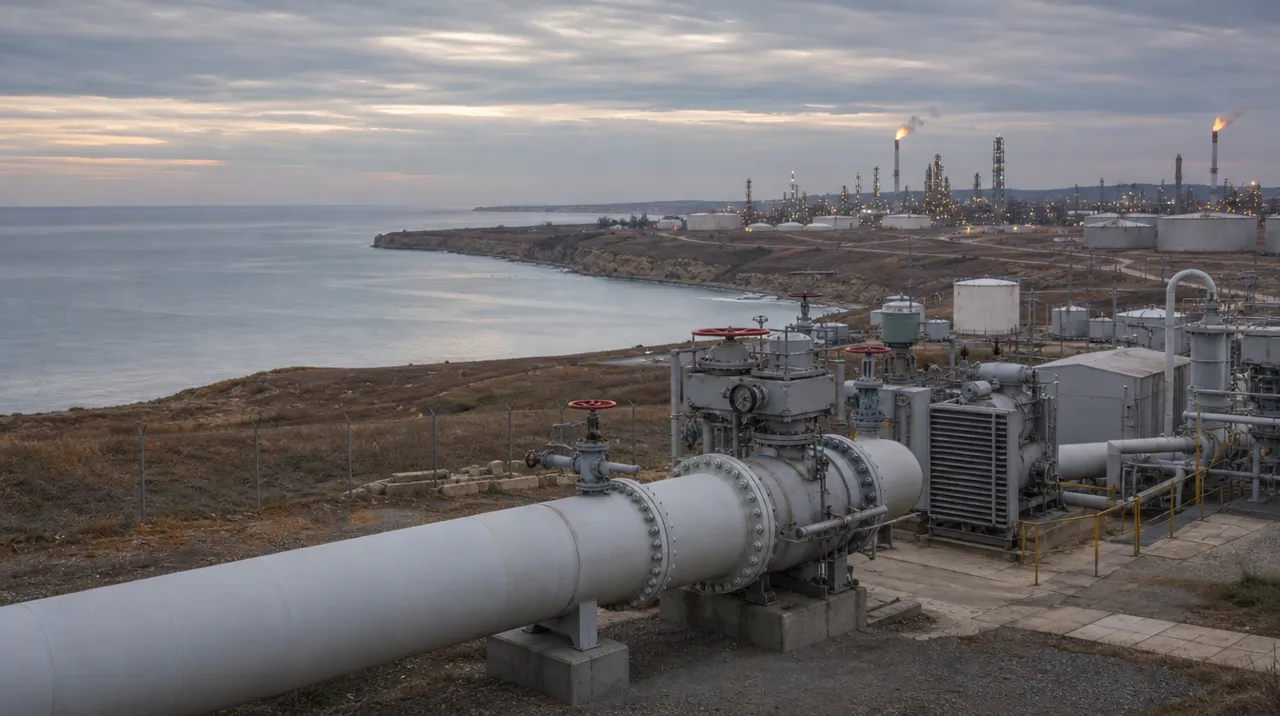
Bulgaria no longer buys Russian gas: Gazprom cut off Bulgargaz on 27 April 2022 and supplies were never resumed. Russian gas still crossed the country through 2025, though: the TurkStream pipeline carries it via Bulgaria to Serbia and Hungary. Bulgaria’s largest refinery, in Burgas, is still owned by Russia’s Lukoil but has been run by a state-appointed administrator since November 2025.
Why did Gazprom cut Bulgaria off in 2022?
Gazprom said it halted deliveries because Bulgargaz had not paid in roubles, as a Russian presidential decree required. Then Prime Minister Kiril Petkov called the demand to change the payment scheme “a grave breach of a current contract”, and the energy minister said Bulgaria would “not negotiate under pressure”, Al Jazeera reported.
Does Russian gas still cross Bulgaria?
Yes, at least until recently. According to Energynomics, Gazprom has booked almost all of the capacity on the route through Bulgaria, about 13 bcm a year. In September 2025, Prime Minister Rosen Zhelyazkov said contracts for the use or transit of Russian gas should end in 2026 and Russian gas should be fully excluded from the market by 2028. As of October 2026 we found no confirmation from Bulgartransgaz or the Energy Ministry that transit has stopped, and no stated position of the new government on it. Treat any claim either way as unconfirmed.
When does the EU ban on Russian gas take effect?
The 27 EU member states formally adopted the phase-out regulation on 26 January 2026, the Council said. According to the law firm Arendt’s summary of the text:
| Contract type | Last day for Russian imports |
|---|---|
| Short-term LNG | 25 April 2026 |
| Short-term pipeline gas | 17 June 2026 |
| Long-term LNG | 1 January 2027 |
| Long-term pipeline gas | 30 September 2027 |
EU countries also had to submit national diversification plans by 1 March 2026.
Where does Bulgaria get gas now?
Energynomics reports that Bulgaria covers its consumption with LNG imports arriving via Greece. The IGB pipeline from Komotini to Stara Zagora is 182.6 km long and carries 3 bcm a year, expandable to 5 bcm with a compressor station, according to its operator ICGB; it started commercial operation in October 2022. Bulgartransgaz also holds 20% of the Alexandroupolis LNG terminal in Greece, which Gastrade says began commercial operation on 1 October 2024.
Who runs the Burgas refinery after US sanctions on Lukoil?
The US sanctioned Lukoil and Rosneft on 22 October 2025. According to BTA, Lukoil holds 89.97% of Lukoil Neftohim Burgas through Litasco. Parliament gave a state special administrator expanded powers; then-President Rumen Radev vetoed the bill, saying it “opens wide the door to arbitrariness and malfeasance”, and MPs overrode him 128–59 on 13 November 2025 (Sofia Globe). Rumen Spetsov was named administrator; on 3 June 2026 the cabinet of Prime Minister Radev replaced him with Evgeni Simeonov, citing a missing recovery plan and a lack of transparency. US licence details are in our Lukoil licence report.
The buyback debate: Spetsov told bTV in May 2026 that the state has “a historic opportunity” to re-acquire the refinery at market price (BTA). Finance Minister Galab Donev said a value-and-benefit assessment would be needed first and that the idea is not in the government’s formal plans (Novinite).
What it means for Varna residents and visitors
Gas for Varna’s homes and businesses no longer comes under a Russian contract, and the 2027 EU deadlines concern importers rather than households. Pump prices are shaped by world markets and the refinery: see fuel prices in October 2026. For the wider politics, read is Bulgaria pro-Russian? and Bulgaria’s sanctions and Ukraine aid.
Sources
- Gazprom – Gazprom fully halts gas supplies to Bulgargaz and PGNiG (27 Apr 2022)
- Al Jazeera – Gazprom cuts gas supplies to Poland, Bulgaria (27 Apr 2022)
- EU (EEAS, Council statement) – Russian gas imports, Council gives final greenlight to a stepwise ban (26 Jan 2026)
- Arendt – EU adopts Regulation to phase out Russian gas and oil imports (2 Feb 2026)
- Energynomics – Bulgaria to end Russian gas transit through its territory in 2026 (25 Sep 2025)
- ICGB – IGB pipeline infrastructure
- Gastrade – About us (Alexandroupolis LNG shareholders)
- BTA – US sanctions on Lukoil and their implications for Bulgaria, explainer (23 Oct 2025)
- Sofia Globe – Bulgarian MPs overturn veto on bill giving expanded powers for Lukoil special administrator (13 Nov 2025)
- Sofia Globe – Radev government replaces special administrator of Lukoil assets in Bulgaria (3 Jun 2026)
- BTA – Bulgaria has "historic opportunity" to re-acquire Lukoil Neftohim refinery, special administrator says (17 May 2026)
- Novinite – Finance Minister Donev on a possible buyback of the refinery (18 May 2026)
Frequently asked questions
Does Bulgaria still buy Russian gas?
No. Gazprom stopped supplies to Bulgargaz on 27 April 2022 and Bulgaria has not resumed them; it covers its needs mainly with LNG arriving via Greece, including through the IGB pipeline (Energynomics).
Does Russian gas still cross Bulgaria?
It did through 2025: TurkStream gas crosses Bulgaria to Serbia and Hungary. The government said in 2025 transit contracts should end in 2026, but as of October 2026 neither Bulgartransgaz nor the Energy Ministry has confirmed an end.
When does the EU ban on Russian gas take full effect?
Under the regulation adopted on 26 January 2026, long-term LNG contracts end on 1 January 2027 and long-term pipeline contracts on 30 September 2027.
Who runs the Burgas refinery now?
Lukoil still owns it, but a state-appointed special administrator manages it. Evgeni Simeonov replaced Rumen Spetsov in June 2026.


