
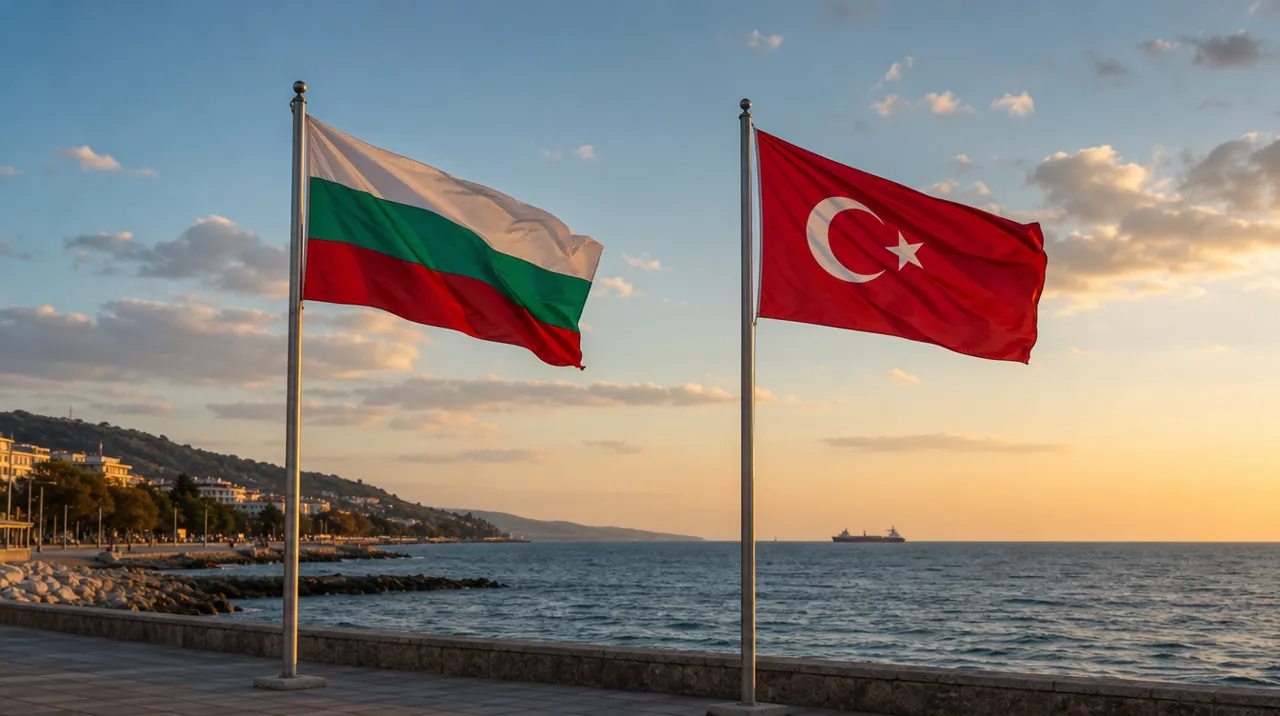
Bulgaria and Turkey in 2026: relations, the Turkish minority and 1989
About 508,000 people in Bulgaria identify as Turks. The 1989 exodus, the DPS, and Bulgaria–Turkey ties in 2026: trade, Black Sea and border, with sources.
About 508,000 people in Bulgaria identify as Turks, 8.4% of those who answered the 2021 census question, according to the National Statistical Institute (NSI). Turkey is one of Bulgaria’s largest trade partners, with about €9 billion in trade in 2025 (BTA), and in 2026 both governments describe the relationship as close.
As of 26 October 2026. Every figure is attributed; where sources differ, we give the range.
How many Turks live in Bulgaria, and where?
The 2021 census (reference date 7 September 2021) counted 508,378 people who identified as Turks; 514,386 gave Turkish as their mother tongue, the NSI says. Census data by district, compiled on Wikipedia from NSI figures, show Turks are a majority only in Kardzhali (about 59%), with large communities in Razgrad, Shumen, Targovishte and Silistra in the north-east.
What happened in 1984–89 (“Revival Process” and the “Big Excursion”)?
- 1984–85: the communist government forced Turks and other Muslims to adopt Slavic names. Estimates of those affected range from 850,000 to 1.3 million, BTA writes; RFE/RL gives “over 800,000”.
- May–August 1989: after protests, about 320,000 (RFE/RL) to 360,000 (OBC Transeuropa) people left for Turkey. Turkey admitted them on tourist visas, hence the name “Big Excursion”, and closed the border on 21 August 1989.
- 29 December 1989: the new leadership officially ended the campaign and allowed people to restore their names (BTA).
- Returns: about 150,000 had returned by the end of 1990 (OBC); RFE/RL says up to 200,000 by the end of 1991.
- 11 January 2012: the National Assembly adopted a declaration condemning the attempted forcible assimilation of Bulgarian Muslims.
What is the DPS?
The Movement for Rights and Freedoms (DPS; in Turkish Hak ve Özgürlükler Hareketi) was founded in 1990 and traditionally draws support from Turkish and Muslim voters. It split in 2024; the Peevski-led party holds 21 seats. Details are in our parties guide and Peevski explainer.
What are Bulgaria–Turkey relations like in 2026?
- 11 June: PM Rumen Radev called Türkiye a key partner in security, migration, energy and transport. He cited record trade of €7.7 billion in 2024 and over 2,200 Turkish companies in Bulgaria, BTA reported. Bulgaria, Türkiye and Romania run the Black Sea mine countermeasures group (MCM Black Sea).
- 6 July: Radev met President Erdogan at Beştepe in Ankara before the NATO summit, with ministers Pulev, Petrova and Peev (Novinite). According to Türkiye’s Directorate of Communications, quoted by BNR, Erdogan said the Turkish community strengthens ties and “Bulgaria’s careful approach to this matter is appreciated”.
- 21 October: in a phone call, Erdogan expressed sympathy over the drone attack in Bulgaria’s Black Sea zone and invited Radev to the COP31 leaders’ summit in Antalya on 11–12 November, TRT World and Anadolu reported.
What it means for Varna
Turkey is Varna’s nearest big neighbour: many visitors drive in via Kapitan Andreevo, and our guide covers the Istanbul–Varna route. Black Sea cooperation also concerns Varna’s naval base. For a taste of the community, see Turkish restaurants in Varna.
Sources
- NSI, ethno-cultural characteristics of the population (Census 2021)
- Sofia Globe (census results, 24 Nov 2022)
- Wikipedia, Bulgarian Turks (2021 census by district, from NSI data)
- BTA ("Revival Process" officially ends, 29 Dec 2025)
- RFE/RL (Revival Process, 30 Jan 2025)
- OBC Transeuropa (The "big excursion" of Bulgarian Turks, 2009)
- National Assembly declaration (11 Jan 2012, in Bulgarian)
- Novinite (Radev meets Erdogan in Ankara, 6 Jul 2026)
- BNR (Erdogan on Bulgaria's Turkish community, 7 Jul 2026)
- BTA (Radev in Ankara, trade about €9bn, 7 Jul 2026)
- BTA (trade record €9bn in 2025, 21 Apr 2026)
- BTA (Radev: Türkiye a key partner, 11 Jun 2026)
- TRT World (Erdogan–Radev phone call, Oct 2026)
- Anadolu Agency via Foreks (Erdogan–Radev phone call, 21 Oct 2026, in Turkish)
Frequently asked questions
How many Turks live in Bulgaria?
In the 2021 census 508,378 people identified as Turks, 8.4% of those who answered the ethnicity question, according to the NSI. That was 0.4 points less than in 2011.
What is the DPS (Hak ve Özgürlükler Hareketi)?
The Movement for Rights and Freedoms, founded in 1990, traditionally draws support from Turkish and Muslim voters. It is chaired by Delyan Peevski and holds 21 of 240 seats after the April 2026 election (Novinite).
Why did Bulgarian Turks leave for Turkey in 1989?
After the 1984–85 'Revival Process' forced Turks to take Slavic names, protests in May 1989 were followed by an exodus: about 320,000–360,000 people left between June and August 1989, according to RFE/RL and OBC Transeuropa.
How big is Bulgaria–Turkey trade?
About €9 billion in 2025, a record and 18% more than in 2024, Deputy Economy Minister Anton Kostadinov said, BTA reported in April 2026.
What did Radev and Erdogan discuss in Ankara?
On 6 July 2026 they discussed trade, investment, transport and energy, Novinite and BNR reported. Erdogan invited Radev to the COP31 climate summit in Antalya.


