
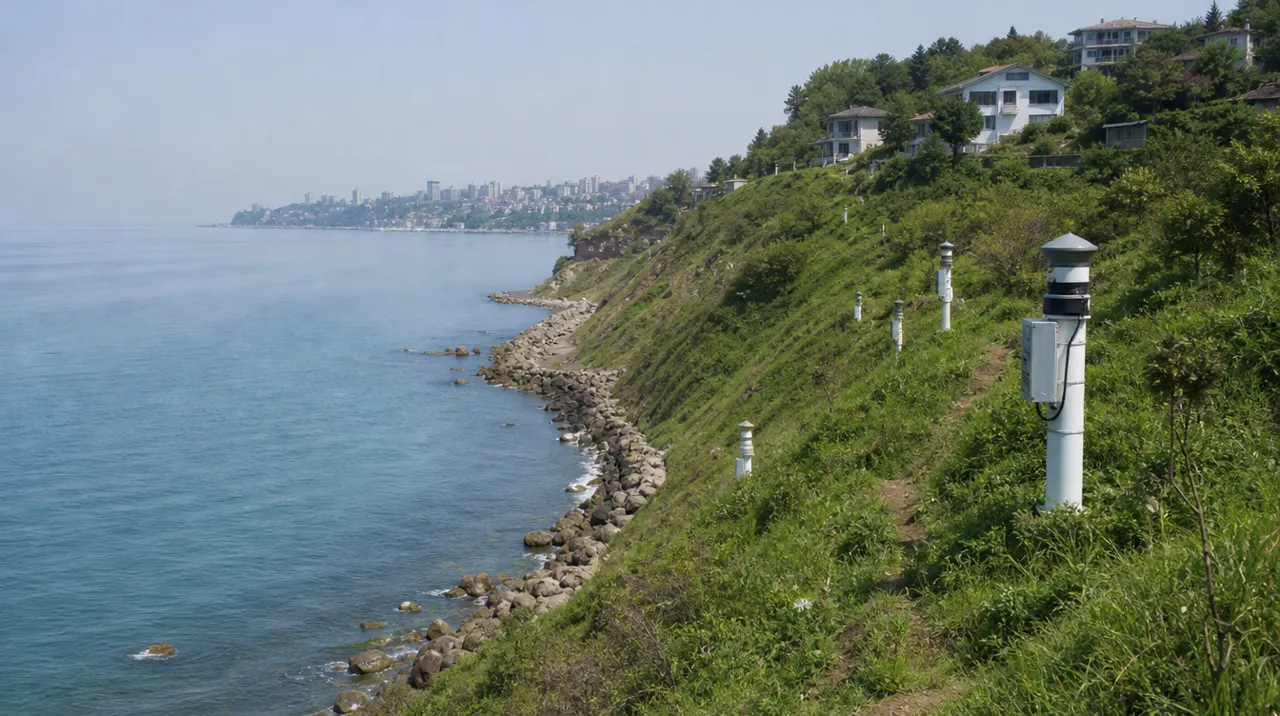
Asparuhovo landslide: Varna's state of disaster set to close on 27 October
Varna's Asparuhovo landslide state of disaster was set to close on 27 October; on 30 October inspectors named an old water main as the main cause.
⏹ Ended (October 27, 2026). This page is kept for reference.
Archived: this report was published on 23 October 2026, ahead of the planned end of the state of disaster on 27 October. The section on the cause was added after the findings announced on 30 October.
On 23 October 2026 Varna Municipality said the state of disaster over a landslide in the Asparuhovo district would close on 27 October 2026, when its legal term expired. BNR Radio Varna quoted the crisis staff as saying it would be lifted from 28 October. A contractor for the reinforcement works had been chosen. Work was expected to begin within about a month.
What did the crisis staff decide?
At its meeting ahead of the planned closure of the state of disaster, the municipal crisis staff accepted a proposal from the municipal company Geozashtita – Varna to widen the official landslide zone. Inside this zone, building and repair works that could affect the ground are restricted. The municipality stressed that the larger zone did not mean the landslide had grown: it marks the area for detailed engineering and geological surveys.
The staff also decided to:
- wait for a report from the Regional Directorate for National Construction Control on the scope of the reinforcement works;
- order an expert study into what caused the landslide;
- create an archive of all decisions, actions and documents of the crisis staff.
What caused the landslide?
On 30 October 2026 Kiril Moskov, director of the Regional Directorate for National Construction Control (RDNSK) in Varna, said the directorate’s expert commission had finished its work. It found that a compromised water main was the main cause of the sheet-pile wall bending and the road collapsing. According to the commission, loose soils, sands and high groundwater together created the conditions for the pipe to fail, Varna24 and Moreto.net reported.
The new manager of the water utility ViK-Varna, Mihail Marinov, said the pipe was built in the 1970s and was past its service life. Varna24 quoted him describing it as a 200 mm asbestos-cement main. Marinov added that construction works in an excavation right next to the pipe had also affected the ground. He said the exact cause of the pipe failure could not be stated with certainty. ViK’s previous manager, Veselin Rusev, had earlier said the landslide was not caused by a ViK water main.
Is there still a risk for residents?
The staff’s secretary, Georgi Georgiev, told BNR on 23 October that the Vilite area was calm. There was no immediate danger to people living nearby, he said. Institutions would keep monitoring the slope. If heavy rain made the ground likely to move again, nearby residents would be evacuated as a precaution.
Who is responsible once the state of disaster closes?
According to the municipality, the crisis staff stops working once the state of disaster closes. The responsible institutions then handle the follow-up within their own powers, from the surveys and the expert report to the reinforcement of the slope.
Why it matters
Asparuhovo, on the south side of the Varna Bay bridge, is one of the city’s biggest residential districts. If you live there or plan to rent or buy in the area, keep an eye on official municipal updates about the landslide zone and any building limits. For the wider housing market, see our report on Varna property prices in 2026.
Corrections
- : This page earlier translated the Bulgarian 'бедствено положение' as 'state of emergency'. The correct term is 'state of disaster'.
Sources
Frequently asked questions
What caused the Asparuhovo landslide?
On 30 October the regional construction control directorate (RDNSK) said its commission found a compromised water main to be the main cause, with loose soils, sands and high groundwater creating the conditions for the failure.
Is it safe to live near the Asparuhovo landslide?
On 23 October the crisis staff said the situation was calm and there was no immediate danger, but that monitoring would continue.
Will residents be evacuated again?
The crisis staff said this would happen only as a precaution, if heavy rain raised the risk of the landslide moving again.
Why was the landslide zone made bigger?
The wider zone is an area for detailed geological surveys and building limits, not a sign that the landslide itself has grown.

